


You may also like
-
Chest Muscles Poster
Reijer Stolk · 1930 · Crisp anatomical scientific print mapping chest musculature with clean black linework on beige
Poster from €9 · Framed from €16
Regular price From €6,00Regular price -
Neck Muscles Poster
Reijer Stolk · 1930 · Refined neck anatomy scientific print with crisp black linework on beige paper
Poster from €9 · Framed from €16
Regular price From €6,00Regular price -
Leg Muscles Poster
Reijer Stolk · 1930 · Precise anatomical scientific print mapping leg musculature in crisp black line on beige
Poster from €9 · Framed from €16
Regular price From €6,00Regular price -
Head of Buddha Poster
Reijer Stolk · 1943 · Serene Buddha head art print with warm golden washes and soft graphite contours
Poster from €9 · Framed from €16
Regular price From €6,00Regular price


-

"Very nice Posters. The quality is amazing and we received it very quickly !"
-

"A shop to visit absolutely. Huge selection of posters. We spent more than an hour there !"
-

"Perfect to find gift. Price are very good. An they can frame and pack it on site"


About the Artist
Reijer Stolk was a Dutch artist active in the early twentieth century, known for his contributions to drawing and graphic arts during a period when scientific accuracy and clarity were highly valued. In 1932, anatomical study was a fundamental part of art education, and Stolk’s work reflects the rigorous training and intellectual curiosity of his era.
His approach to anatomical illustration aligns with the broader European context of the interwar years, when advances in medicine, education, and design were closely intertwined. Those interested in our famous artists collection often appreciate how such works bridge the gap between scientific inquiry and visual culture.
The Artwork
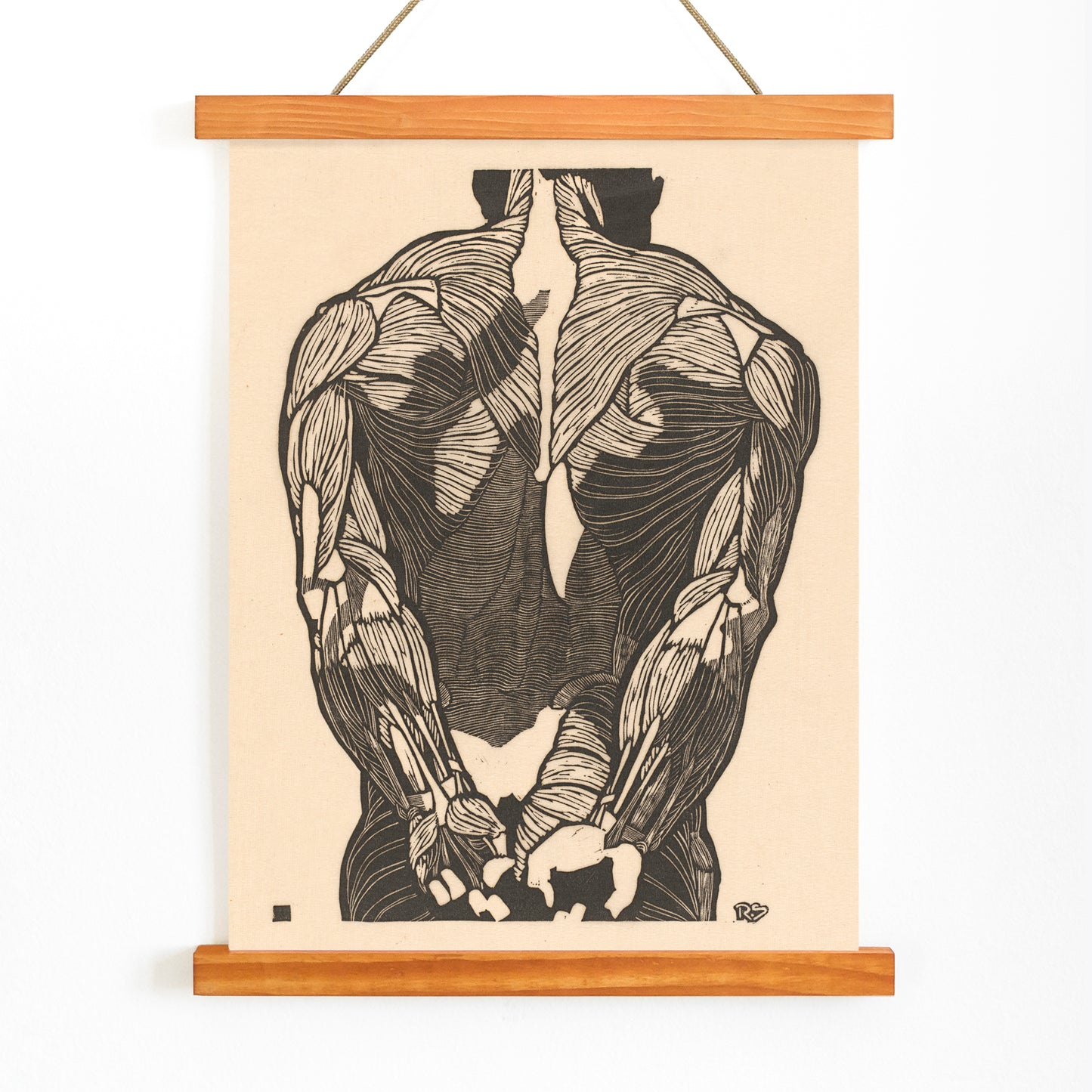
Back Muscles 2 is part of a tradition of anatomical plates created to teach the structure and function of the human body. Produced in the early 1930s, this illustration would have served as a reference for art students, medical professionals, and anyone fascinated by human anatomy. It reflects a period when understanding the body was seen as essential to both artistic and scientific pursuits.
The artwork also embodies the era’s belief in the importance of knowledge and self-improvement, presenting the body as something to be studied and perfected. Today, it stands as a vintage print that brings a scholarly and historical dimension to interiors, complementing selections from our science wall art.
Style & Characteristics
The image presents the back muscles in isolation, rendered with precise black linework against a warm beige background. The composition is clean and uncluttered, focusing attention on the anatomical forms without distraction. The use of high-contrast ink and ample negative space gives the print a vintage yet timeless quality.
The mood is analytical and refined, reminiscent of classic medical atlases or atelier studies. This scientific print is ideal for those seeking black-and-beige black and white decor that combines clarity with a sense of human presence.
In Interior Design
This anatomical print is well-suited to offices, studios, libraries, or hallways where thoughtful, conversation-starting art is desired. Its understated palette works beautifully with minimalist or mid-century interiors, as well as contemporary spaces that favor clean lines and curated details.
Pairing the beige tones with natural materials like linen or oak, and echoing the black ink in frames or fixtures, creates a harmonious look. As a vintage scientific print, it also fits clinics, gyms, or creative workspaces where curiosity and craftsmanship are valued.