


You may also like
-
L’Eau Poster
George Barbier · 1924 · Elegant Art Deco poster of waterside leisure in vivid blue with pink accents
Poster from €9 · Framed from €16
Regular price From €6,00Regular price -
Au Polo Poster
George Barbier · 1924 · Chic Art Deco polo poster with poised silhouettes and refined color contrasts
Poster from €9 · Framed from €16
Regular price From €6,00Regular price -
L’aveu Difficile Poster
George Barbier · 1924 · Art Deco fashion poster featuring poised figures and theatrical elegance in jewel tones
Poster from €9 · Framed from €16
Regular price From €6,00Regular price -
Sérénade Poster
George Barbier · 1924 · Elegant Art Deco poster featuring a blue-clad musician serenading a woman in orange
Poster from €9 · Framed from €16
Regular price From €6,00Regular price


-

"Very nice Posters. The quality is amazing and we received it very quickly !"
-

"A shop to visit absolutely. Huge selection of posters. We spent more than an hour there !"
-

"Perfect to find gift. Price are very good. An they can frame and pack it on site"


About the Artist
George Barbier was a celebrated French illustrator whose sophisticated designs helped define the Art Deco movement in the early twentieth century. Renowned for his fashion plates, theatrical costumes, and book illustrations, Barbier brought a sense of modern elegance and refinement to every project he touched.
His work bridges the opulence of the Belle Epoque and the streamlined glamour of the Jazz Age, making him a favorite among collectors of famous artists wall art. Barbier’s legacy lies in his ability to transform contemporary style into enduring decorative art.
The Artwork
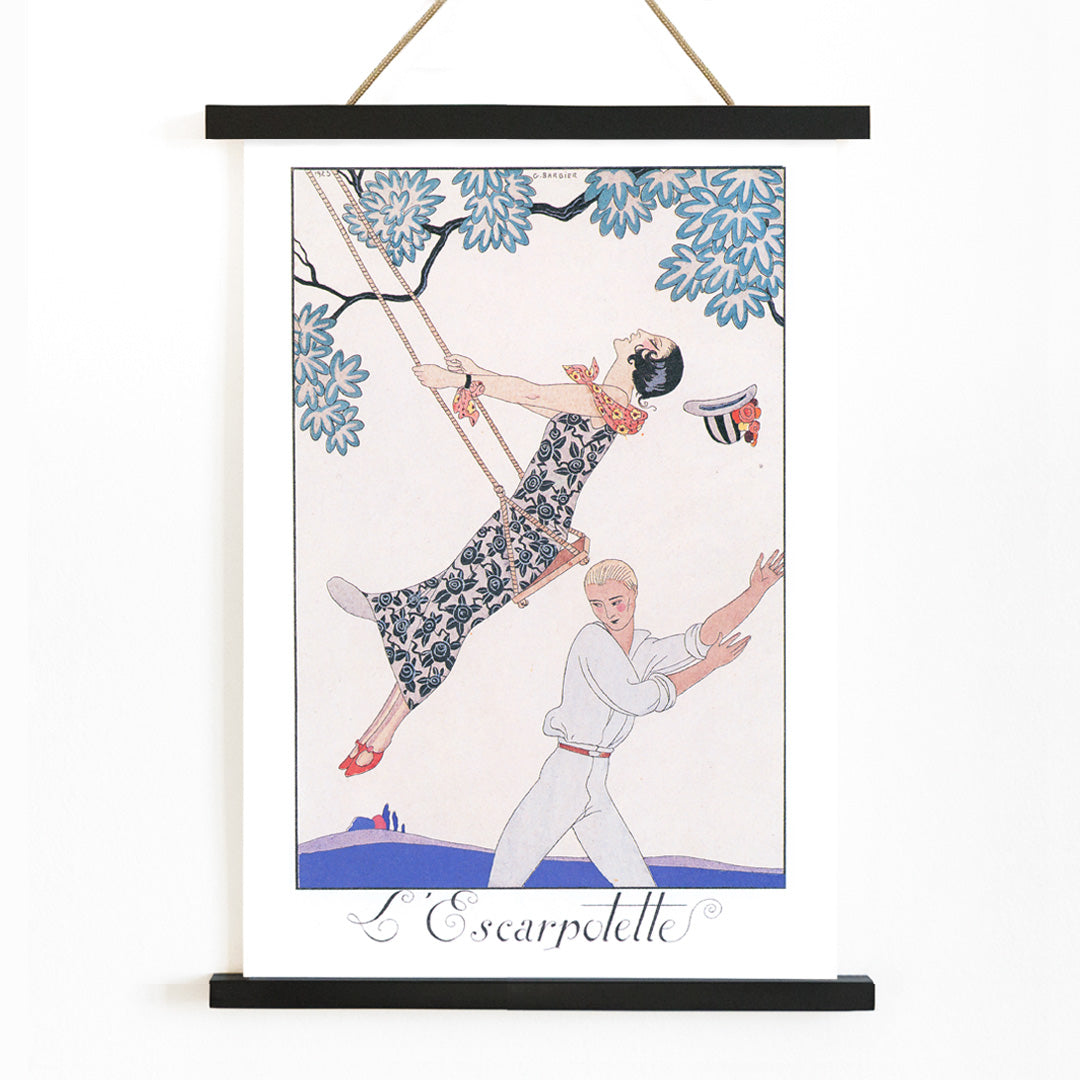
Created in 1924, L Escarpotette reflects a period in Paris when leisure, entertainment, and the image of the liberated woman became cultural touchstones. The motif of a woman on a swing alludes to both playful freedom and the performative spirit of the era, capturing the optimism and dynamism of 1920s society.
This poster was part of a broader movement where illustrated prints shaped public perceptions of elegance, nightlife, and fashion. Barbier’s work, emblematic of this trend, continues to resonate as a symbol of pleasure and self-assurance, linking past ideals with modern sensibilities. For those interested in vintage graphic design, it offers a window into the visual culture of the Art Deco period and complements collections like blue tone posters.
Style & Characteristics
The artwork features a vertically oriented composition with a stylized female figure poised on a swing. Barbier employs crisp black lines and broad, flat areas of color to create a striking silhouette against a luminous blue background.
White highlights define the swing and figure, while a vivid red accent draws the eye and adds energy to the scene. The overall effect is playful yet sophisticated, balancing clarity with decorative flair—a hallmark of Art Deco design. This piece stands out as a vintage poster that brings both graphic impact and subtle charm to any setting.
In Interior Design
This Art Deco poster introduces a touch of Parisian sophistication to living rooms, bedrooms, or dressing spaces. Its bold lines and cool blue palette pair beautifully with brass accents, lacquered furniture, and plush textiles for a 1920s-inspired atmosphere.
To enhance color harmony, coordinate with navy or denim fabrics and add subtle red details through cushions or ceramics. The poster also integrates seamlessly into a curated display of classic art prints and can be elegantly finished with a simple mat from the frames collection.